We build your Amazon creative. Then we test it until it converts.
Images, A+ content, and videos.
Built by AI for volume and finished by human designers for judgment.
Then split-tested on your real traffic so you keep what actually wins.
Bring one ASIN. We will tell you what your creative is costing you.
- AI plus humanSpeed and judgment, not one or the other
- Batch-level QAYour whole catalog reviewed as one
- Tested, not deliveredThe loop keeps running after handoff

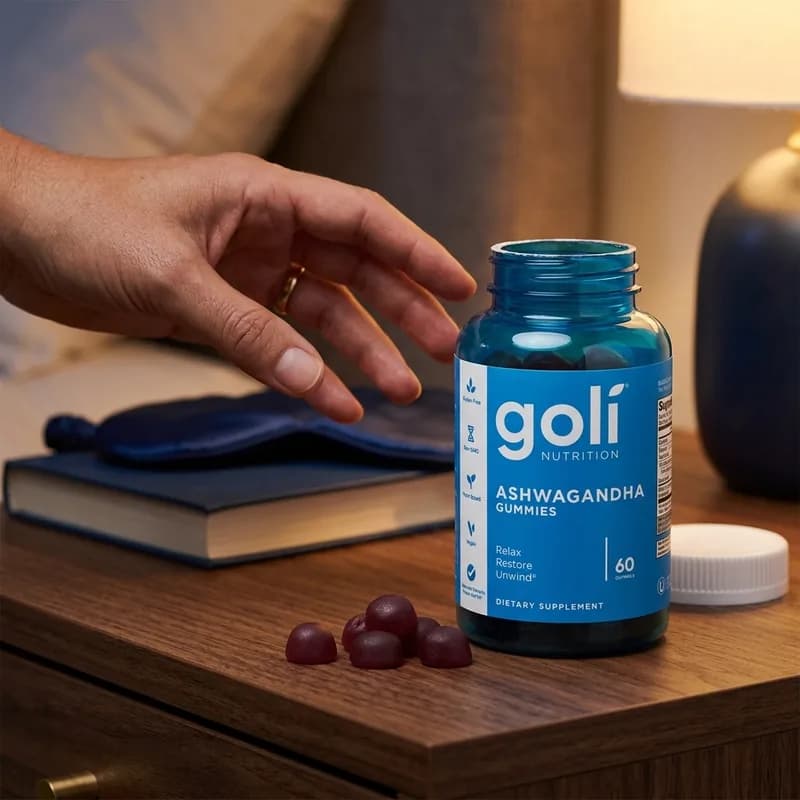

Two numbers decide what your listing earns.
Your creative is the only lever that moves both at the same time.
You pay per CLICK on Amazon Ads. Never per impression.
Impressions are earned. Rank and reviews earn them.
So the click is the moment you spend money.
Which means every click you buy and fail to convert is money that already left your account.
Same sessions. Higher CVR. Cheaper ads and more profit per sale.
That is the whole game.
CTR
How many people click you in search instead of the listing next to you.
Your main image carries almost all of this. It is the only asset a shopper sees before deciding.
CVR
How many of those clicks turn into orders once they land on the page.
Your image stack, your A+ content and your video carry this. Scale, use case, detail, and the objection you never answered.
There is a brand in your category right now with a worse product than yours.
Fewer features. Higher price. Thinner warranty.
They are beating you on ONE thing.
Their images answer the question yours leave open.
Three deliverables per SKU. Built, gated and tested.
Images, A+ content and video. The whole page, not one asset on it.

Images
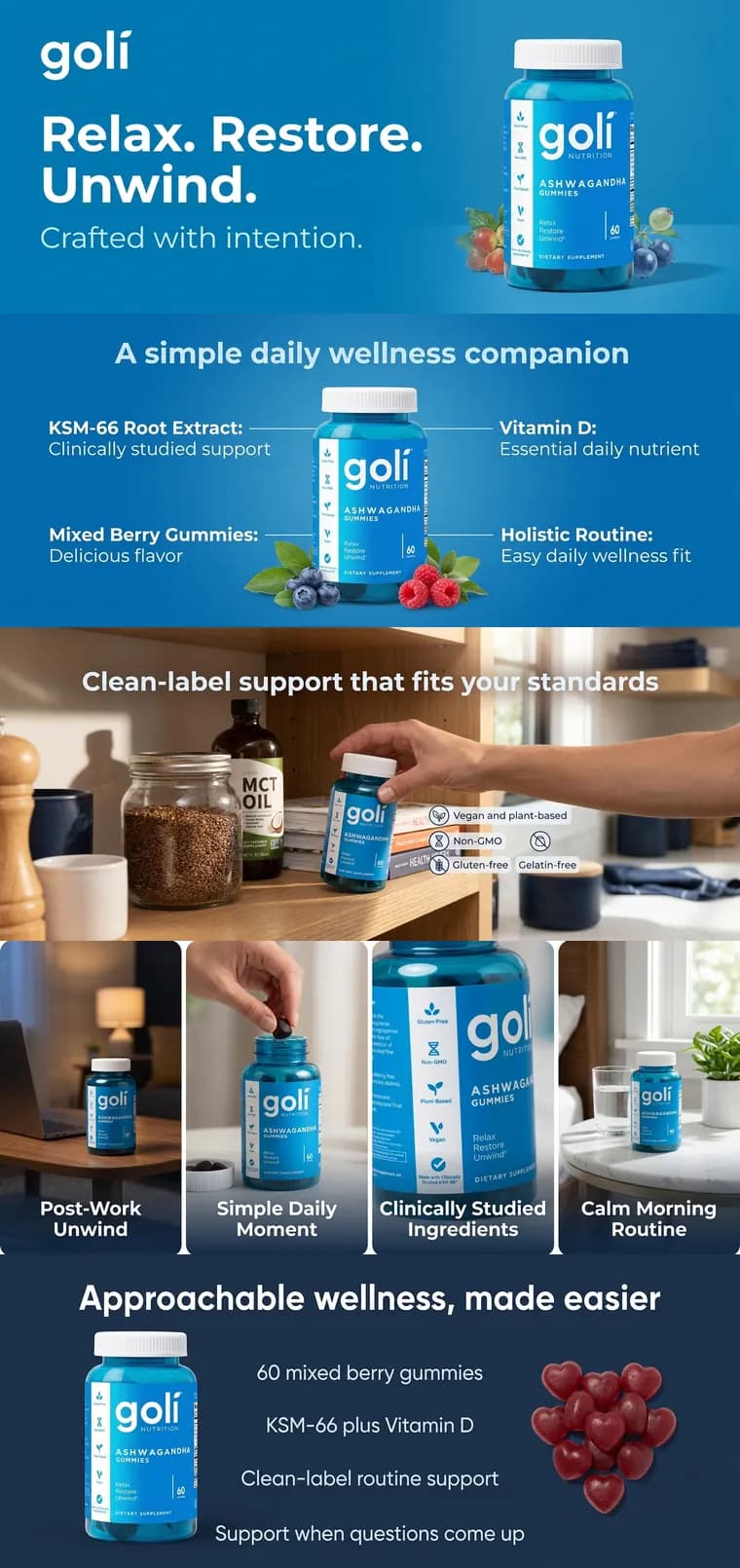
The main image plus the full secondary stack. Each slot does one job and no slot is filler.
- Grounded compositions built to survive Amazon's image rewrites
- Use case, scale, detail, lifestyle, comparison
- Infographic callouts pulled from your actual review mine
A+ content
The modules below the fold, where a shopper who is still undecided goes looking for a reason to say no.
- Module order built to close the remaining objection
- Comparison charts against the alternative they are also viewing
- Brand story that earns the price instead of apologizing for it
Videos
The listing video and the short cuts that feed Sponsored Brands video and your product page carousel.
- Hook inside the first three seconds or it does not ship
- Readable with the sound off, because that is how it gets watched
- Cut to multiple lengths and aspect ratios from one shoot
A creative stack is an argument, not a gallery.
Nine pretty images that all say the same thing will lose to five that answer five different objections.
Sequence beats polish.
AI does the volume. Humans do the judgment.
Neither one gets to ship alone. That is the entire point.
- 1Human
Mine the evidence
Your reviews. Your competitors' reviews. Their image stacks and where those stacks go quiet.
We come out with the real objections and the real buying triggers, written down.
- 2Human
Set the direction
A designer decides what each slot has to accomplish before anything gets generated.
Concept, hierarchy, sequence. This is the part AI is worst at and it happens first.
- 3AI
Generate at volume
The platform builds variations against that direction, across your catalog, in parallel.
This is where the speed comes from. A hundred SKUs costs what one costs in calendar time.
- 4Human
Finish by hand
Designers fix what AI reliably gets wrong. Type, kerning, hierarchy, realism, product accuracy.
Anything that cannot be fixed in two focused passes gets blocked instead of shipped.
- 5Human
Run the gate
The full batch is reviewed as one unit against a fixed rubric. Details in the next section.
- 6AI plus human
Launch and test
Assets go live and the measurement starts. The winner becomes the new control.
Then we attack the control again.
Delivery is where most creative work stops. Here it is the starting line.
A folder of images is a guess until traffic votes on it.
- BuildTwo directions per slot, not one
- LaunchInto the live listing
- MeasureCTR on main, CVR on the stack
- Keep the winnerIt becomes the new control
Then we build against the winner and run it again
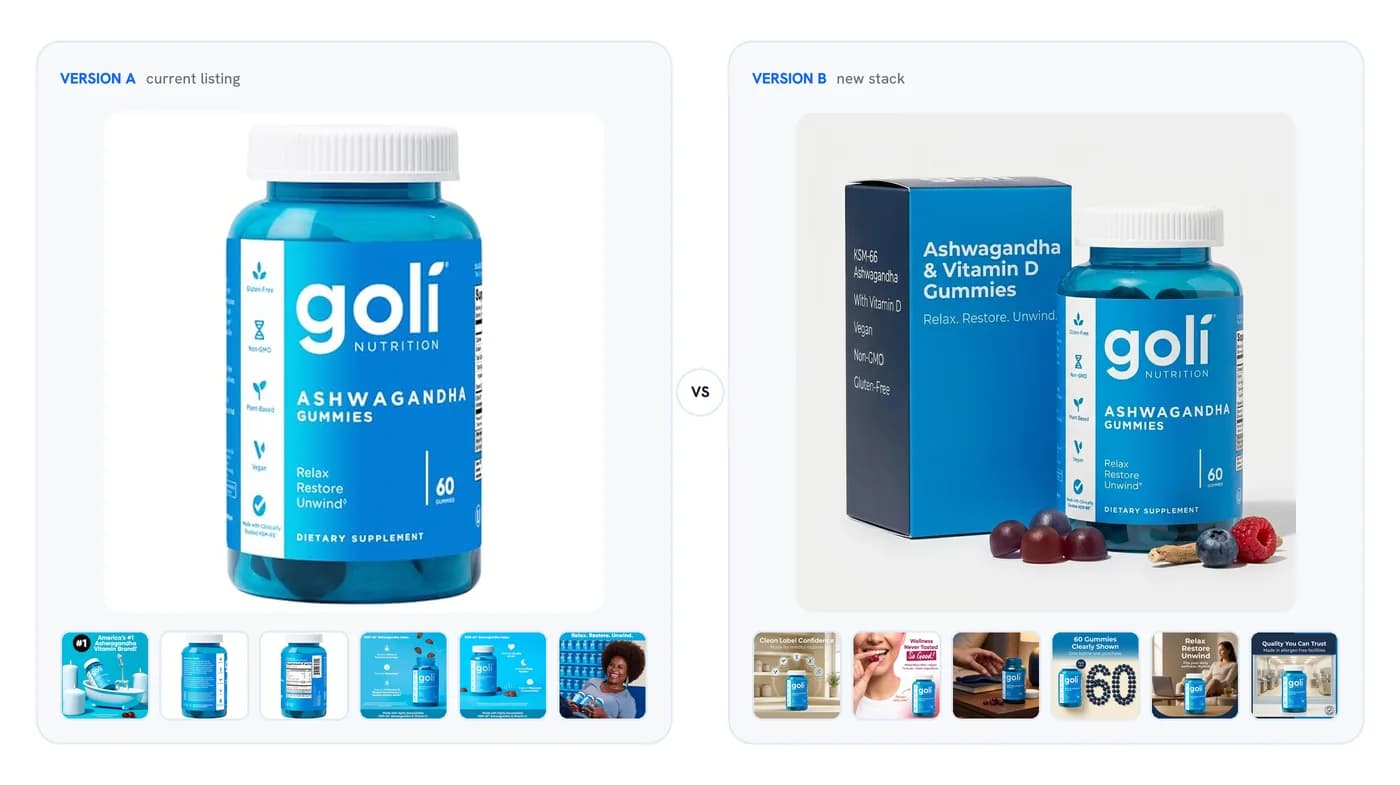
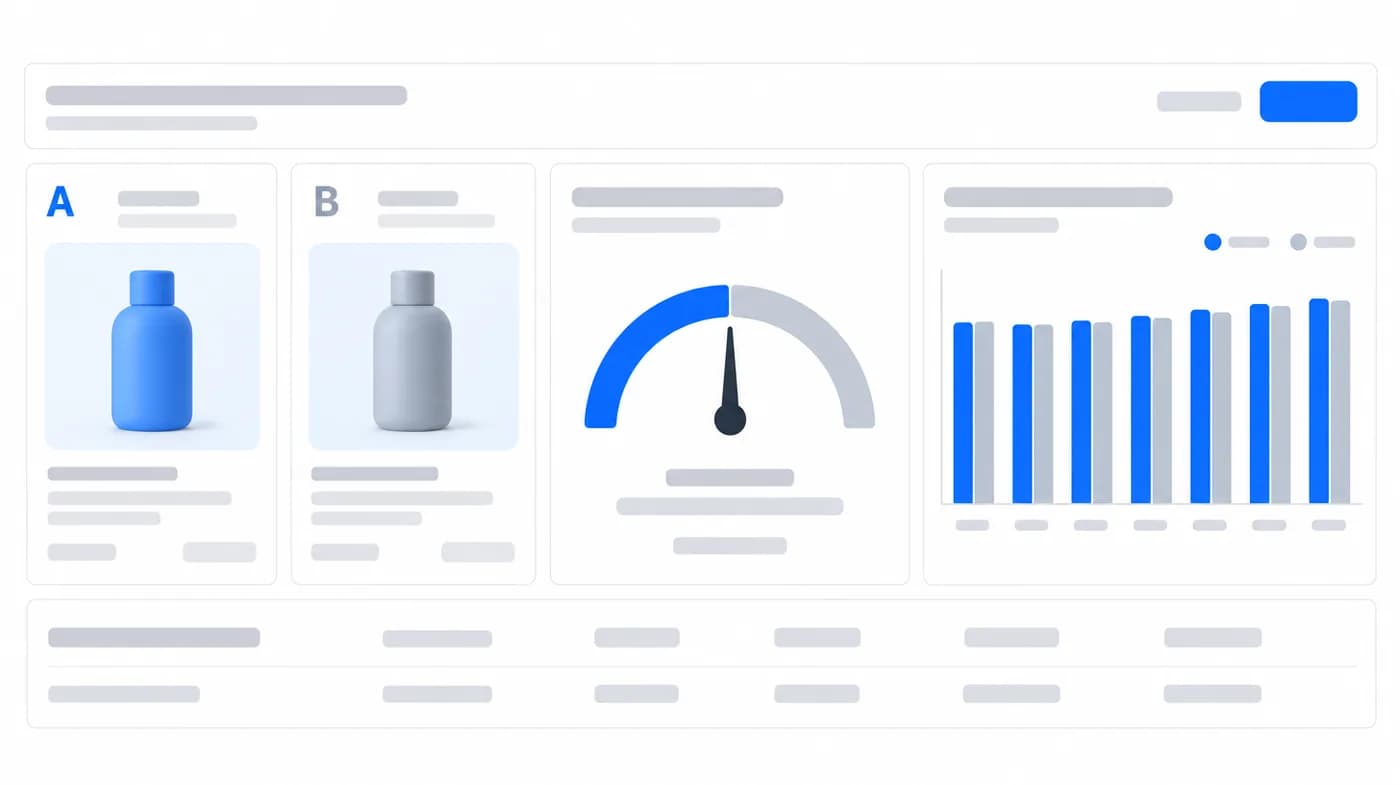
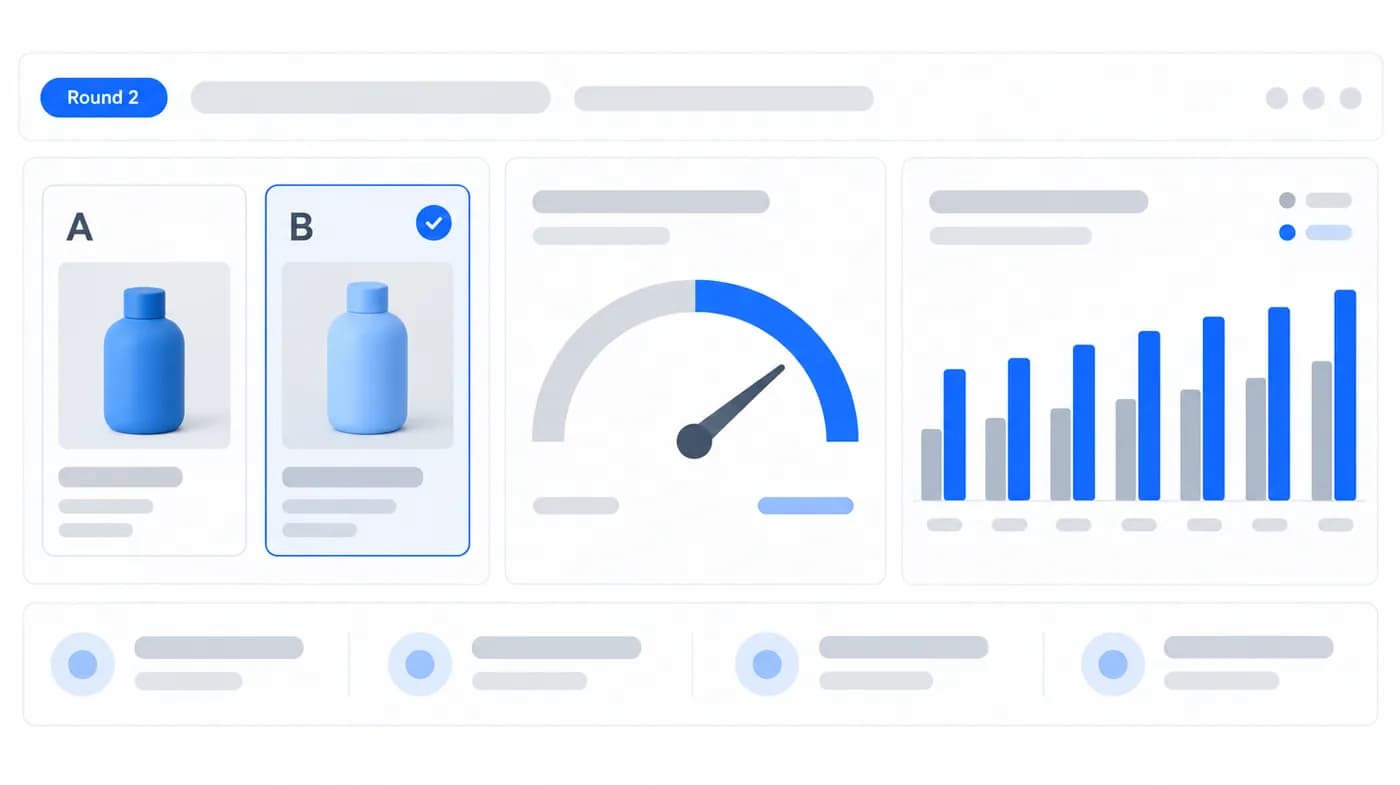
Illustration. Real results come from Amazon's Manage Your Experiments and vary with the product, traffic, pricing, reviews and competitive environment.
Now the honest part about Amazon testing.
Amazon's Manage Your Experiments needs Brand Registry and enough traffic on the ASIN to reach significance. Not every account qualifies, and not every ASIN in a qualifying account qualifies either.
Where your account does qualify, we run it there and read the result Amazon reports.
Where it does not, we test in sequence and read the change against your own baseline over a matched window.
We tell you which one you are getting before any work starts. Not after.
You have three options. Two of them have a hole in them.
A pure AI tool, run by you
- Fast and cheap per asset
- Ships the least bad attempt when it cannot get it right
- No audit that the claim on the image is actually true
- Nobody reviews the catalog as one batch
- The work still lands on your team
A design shop
- Genuinely good looking files
- Built on taste, rarely on evidence from your reviews
- Slow and expensive once the catalog gets big
- Hands you a folder and walks away
- Quality freezes at the last revision
Managed, the way we run it
- AI for volume, designers for the calls AI gets wrong
- Every claim traced back to a real source before it ships
- The batch is the unit of review, not the single image
- We can refuse to ship. A blocked asset beats a wrong one
- The testing loop keeps running after delivery
One more thing nobody is telling you.
Amazon is quietly regenerating main images.
The trigger is the floating cutout. Product clipped onto blank white with no shadow, no surface and no light source.
Amazon replaces those with its own generated scene. The product gets smaller in frame, the background goes grey, and the packaging text goes soft.
Your CTR drops and nobody sends you an email about it.
Grounded photographic images are left alone.
So we build grounded first. Every time.
Nothing ships with an error. There is a rubric, and it is not negotiable.
Red
Blocks the batch. Nothing goes out.
- Any text error anywhere in the frame
- AI artifacts on the product itself
- Two images in the same set contradicting each other
- A spec stated one way on one SKU and differently on the next
- A claim that contradicts your source material
- Trademark symbol errors
- Anything on your avoid list
- Amazon policy blockers
- Placeholders or leftovers from an earlier pass
Yellow
Goes to a revision round. Does not block.
- Punctuation and capitalization drift across the set
- Text too small to read on a phone
- Realism issues in a generated scene
- Layout and craft judgment calls
- Visual system drifting between SKUs
- The same information repeated in two slots
- A theme that does not match the product
We review your whole batch at once. Not one set at a time.
Here is why that matters.
When you review image sets one by one, every set can pass and the batch can still be broken. A spec written one way on SKU 4 and another way on SKU 51. A material named differently across a product family. A benefit that belongs to one variant quietly showing up on another.
Cross-product contradiction is invisible at the set level and obvious at the batch level.
It has been the single most expensive failure in this kind of work. So the batch is the unit of review.
Creative is the cheapest lever on the page. It is also the least tested.
Added in annualized sales from a single main-image experiment.
Sales increase in three weeks after a new set of listing images went live.
Creative tests run and 16,000+ customer comments analyzed to date.
Results vary depending on the product, traffic, pricing, reviews and competitive environment.
This is not for everyone. Read both columns before you book.
You have 20 or more ASINs and creative is the bottleneck, not the product.
You are already buying clicks and losing them at the listing.
You want the testing run for you, not a folder handed over.
Your catalog is big enough that one main image change moves real revenue.
You have one or two ASINs. The self-serve plan does that job for a fraction of this.
You want files only, with no measurement attached.
You are shopping for the cheapest price per image. We will lose that comparison on purpose.
You need the whole catalog live this week. Good work ships in phases.
The things people ask before they book.
Scope sets the price, so we set it on the call.
Catalog size, category complexity, how much usable source material you already have and whether you want the testing loop run continuously or once. Those four things move the number more than anything else.
You will get a real figure on the first call, not a follow-up proposal three days later.
Work ships in phases, not in one drop.
A large catalog gets split into batches so you see live assets and early read-outs while the rest is still in production. Waiting for everything to be finished before anything goes live wastes months of data.
Exact dates are set against your catalog on the call.
No. Revisions are included and priced in from the start.
Treating them as a line item creates an incentive to ship work that needs revising. We would rather not have that incentive.
You do. Full rights, on delivery, including the variants that lost the test.
CTR for the main image. CVR for the stack.
Where your account qualifies for Manage Your Experiments, we run it there and read what Amazon reports. Where it does not, we test in sequence against your own baseline over a matched window and tell you plainly which method produced the number.
We will not dress up a sequential read as a controlled test. They are different things.
It helps. It is not required.
We work from whatever you have. Where a real photograph is the only honest way to show something, we say so upfront instead of generating something that implies a product detail nobody has verified.
Self-serve means you drive the platform. You upload, you prompt, you review, you publish, you decide what to test.
Managed means we drive it, with human designers finishing the work, a batch-level quality gate in front of delivery and a testing loop that keeps running afterward.
Same engine underneath. Different amount of your time.
We pull up your listings on screen and go through them.
You will hear where your stack is losing the click, where it is losing the sale and what we would change first. That part is useful whether or not you ever work with us.
Let's look at your catalog.
Bring one ASIN you think should be selling more than it is.
We will tell you what your creative is costing you.
No deck. One call, your listings on screen.